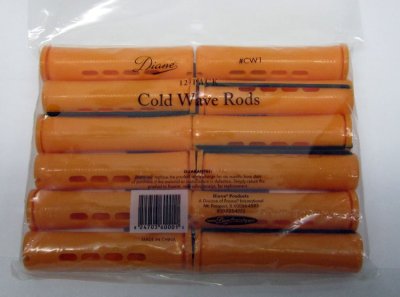
This is my Perm Rod Set done using orange perm rods. I bought the perm rods on Amazon (here).
36 x Perm Rods Jumbo Tangerine (3/4 inch diameter)
My method is the same as everyone else’s (nothing special at all) but I love the results I get.
Dry Perm Rod Set on Fine Natural Hair
Dry Perm Rod Set on Fine Natural Hair
Dry Perm Rod Set on Fine Natural Hair
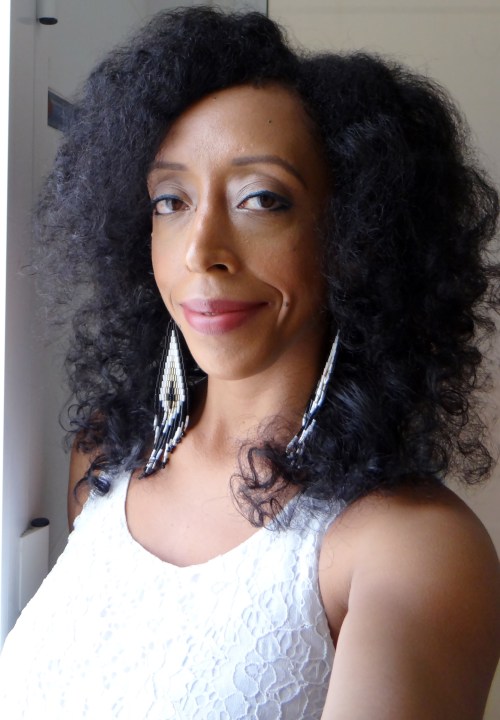
If you have seen my hair before you will know that I have what I call fine and thin natural hair. It is long but still on the fine and thin side and I usually prefer setting my styles on dry hair versus wet hair. Starting with dry hair usually results in fluffier and fuller looking curls. When I set on wet/damp hair I get great definition but it lacks the fullness I like so I opt for dry styling.
Starting on dry hair that was stretched out I first separate my hair into sections (about 8) from which 2 – 3 perm rods will be used per section. I ever so slightly spritz my hair with water, followed by my DIY Creamy Leave-in and detangle. I then use a tiny dab of gel for hold and definition and then twist the root of my hair (twirling it) 2 – 3 times and then wrap my hair around the rod. I do a twisting motion at the same time as I wrap my hair around the rod. I used a total of 26 perm rods, leave them in overnight with a scarf protecting my hair during the night. The next morning I take a little oil to my fingertips to take down the perm rods. I then separate my hair by unwinding the root in the opposite direction of how I twirled my hair and then separating the hair. Once I have separated at least once I lift my roots and fluff my hair with an afro comb and continue to separate and shape till I am satisfied with the results.
I have been a little off about posting the different articles I have contributed to Global Couture. If you haven’t already visited the site then you really should! It is a wonderful source of information and inspiration!
I just wanted to share some of the previous articles along with the links to them.
Preparing your Natural Hair for Bleach
Being Natural With Nay-saying Family Members
7 Steps to Help Determine the Right Products for your Natural Hair
Methods to Cutting your Natural Hair at Home
Develping a Hair Routine or Chasing Hair Envy
Taking Care of Natural Hair on a Tight Budget
I would love to hear what you think if you read any of them.
First off I want to wish you all a very Happy New Year! I hope that 2015 ended well and that 2016 will be a bright year full of love, good health, great company, prosperity and happiness for you and your family 🙂
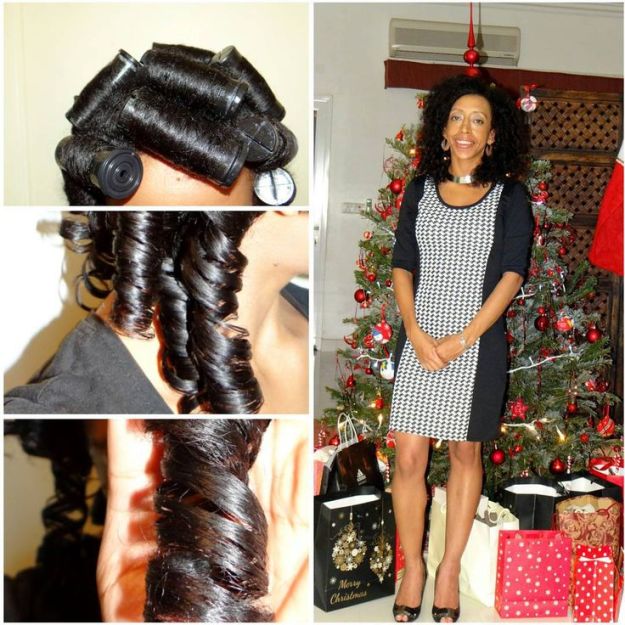
I wanted to start my blog post this year with a styling tutorial. I actually (hopefully) will be a little more “adventurous” with my styling options in 2016. So to kick things off here is my Heatless Wave Curls.
This is my “quick fix” styling option that I love! There are a few things I like about this style: 1. it sets in four hours so no sleeping with rollers in my hair (I have found a method that is not too uncomfortable but still prefer not to). 2. it is a great last minute styling option if I haven’t planned anything but need my hair done for an night out and 3. it gives my fine and thin hair volume!
15 Jumbo Perm Rods (1- 1/4 inches) – details about these here
A little oil (to take down the rods).
Perm rods done
4 hours later!
4 hours later!
4 hours later!
Method:
After spritzing my hair with a tiny bit of water I added a little spray leave-in conditioner to help moisturize my hair (just to lightly moisten but not to make it soaking wet). I lightly detangle my hair to make sure there are no knots and then I spay a tiny bit of my Spray FSG to help give really light hold. My rolling method is to first try and make sure my hair is smooth, I then roll the perm rod up my hair (for one rotation) and then twirl my hair once, roll up again and twirl the perm rod towards the root before closing the perm rods. I literally let it set (without heat) for 4 hours and then take the rods down, separate and I am done!
It is a little easier to understand the “how to” in the video:
As I mentioned this is a “quick fix” styling option that I like to do whenever I haven’t had time the day before to plan for a hairstyle. The hold is really light and does not last for days and days therefore I will usually install the perm rods again after a day or two either during the day or at night (e.g. during the week when I have work and can’t sit in my office with perm rods on my head LOL).
I would love to hear what you think. Have you tried day time jumbo perm rod sets or any other perm rod sets done during the day? I would love to hear from you!
Today I wanted to share something that has become a “hair saver” (for me). My Hard Protein/Moisture Balancing Treatment.
This recipe has become part of my routine however, it is not something I do every week or even every month because as the name suggests it is a HARD protein treatment. Before I delve into the details of what I use, how I mix, how I apply etc. it is important to point out a few things.
This is an extremely hard protein treatment that should only be done once every 2 – 3 months (some might only want to do this 2 times a year).
I have been told that this feels/acts like the 2 step ApHogee Protein Treatment therefore if you have tired that before, keep in mind how often you have used it/how you hair felt afterwards. Do not do both this and ApHogee treatments since they work similarly and you might end up with protein overload!
It is vital to do a Moisturizing Deep Condition (DC) after. VITAL! Your hair will feel hard, brittle and almost straw-like (this is normal) however, it should not feel like that after you have done the Moisturizing DC. Without the moisturizing DC you will not have a protein/moisture balance and that will just result in breakage (not good)!
If your hair does still feel hard after your Moisturizing DC, do another DC again!
Ensure you have fully and properly detangled your hair before you apply the protein mix. Protein makes the hair hard (and this one does so extremely well) and if you haven’t detangled your hair beforehand you will only end up breaking hair in the spots where you have knots as you try to distribute the mix.
Work with freshly washed, clean and damp hair to remove any product buildup which will allow the protein to latch on and penetrate the hair strands (this is when you would detangled your hair).
Once the mix is on your hair DO NOT TOUCH YOUR HAIR!
Leave the mix on for no more than 15 minutes!
Some people like to use a drier/hooded drier after applying the protein to help dry the hair however, since I do not use any form on heat I do not suggest this step in my demonstration. (If you do decide to use heat, please ensure it is not set to high because you can cause damage).
Once the time is up use your shower head/faucet (warm water) to rinse your hair going in a downwards motion. After you let water run over your hair slowly use your finger tips to help ensure all of the protein has been rinsed out (gently). You can use conditioner after you rinse to make sure the protein is out.
ALWAYS DO A MOISTURIZING DC!!!!! (Sorry but I have to stress this part).
Ingredients/Tools Used:
7 oz Hot Water (I used bottled water)
0.24 oz Gelatine
0.5 oz Pure Apple Cider Vinegar (ACV)
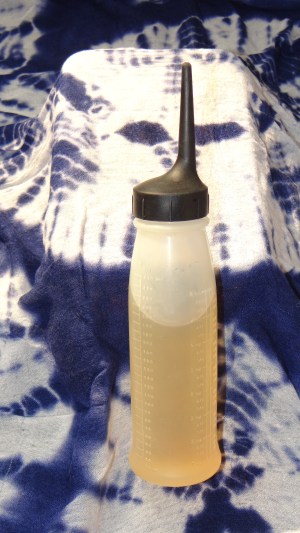
Applicator bottle
Bowl/container (to mix)
Spoon
Essential Oil (optional if you can’t stand the smell of ACV but the ACV smell will go away anyways after you rinse and DC your hair).
Mixing:
Sprinkle the gelatine over the water (while it is still hot) and stir to dissolve the gelatine. Add the ACV, stir again and pour into your applicator bottle. Allow the mix to completely cool down (if you plan to add EO add it after the mix has cooled down).
Application
While you are letting the mix cool wash and detangle your hair so it is free from products, this will allow the protein to attach and absorb into the hair strands easier. Section your hair into parts to make it easier to work with and pour the mix from root to tip, paying particualr attention to the ends since this is where breakge occurs most frequently. Distribute the mix by finger combing/wide tooth comb but be VERY CAREFUL since the protein will make your hair feel hard and can cause breakage if you are rough. (This is why it is important to make sure you have fully detangled your hair prior to application)! After you are done with one section LEAVE THAT PART ALONE, do not touch it anymore and move onto the next. Once you are done allow the mix to sit for no more than 15 minutes. Typically people like to use a drier/hooded drier while waiting for the 15 minutes however, I do not use heat and therefore do not take this step. If you do, please make sure that you do not bake your hair, you will see damage if you do!
After the 15 minutes using your shower head/facet let warm water run over your hair going in a downwards motion (do not use your fingers to manipulate) unitl you feel your have rinsed out the protein. Once you have rinsed with water alone then you can gently use your fingers to run over your hair to make sure it is protein free, you can use a little conditioner to help ensure all the protein is out. Follow up with a Moisturizing DC for no less than 1.5 hours and proceed with your styling. If you feel your hair still feels rough, dry, brittle you need to do another moisturizing DC to restore the protein/moisture balance!
This is my demonstration video:
If you try this mix I would love to hear what you think and if you have used ApHogee before I would love to hear if you think these two work similarly or not.
So this post comes a little late (I am currently sitting in a hotel in Dubai waiting to check out). I wanted to yet again share some head wrap styles! I had posted a few photos on Instagram (yes I am addicted) and was kindly requested to do a demonstration of one of the styles so I figured I would do 2 styles in one video.
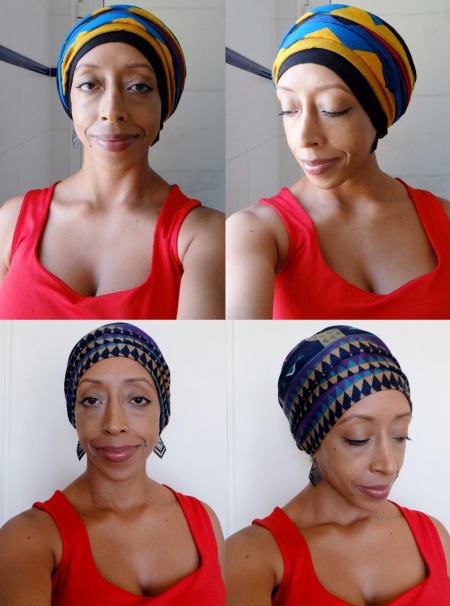
2 head wrap styles for winter
In the first example of my video I start of with a messy bun that is covered with a satin scarf first (since the outer scarf I use is neither Satin nor Silk) and then I used the outer scarf.
For the second style I start off with 2 really rough flat twists that I pin down and again use my satin scarf first followed by the outer scarf.
It is easier to explain in video which I of course have:
I would love to hear if you use scarfs during winter to help protect your hair?
This baby is my DIY Hair Setting Lotion and before I begin I want to point out that while I consider this a “lotion” the name comes from the fact that it has a lotion-ish consistency. It does not contain the main ingredients included in most normal hair lotions/creams you can buy from the store. What this recipe does contain is Flax Seed Gel (FSG) and Whipped Butter, along with a little natural honey. It is an all natural (no parabens, no chemicals, no alcohol) product that helps enhance your curls, provides you with light hold while at the same time provides moisture and seals in that moisture.
As I have always mentioned in all of my DIY recipes, you do not have to follow my recipe step by step (it is good to experiment for yourself) but just so you have an idea of what I do, I include my: DIY Protein Hibiscus Flax Seed Gel and my DIY Double Coffee Whipped butter. (I will provide you with ingredient alternatives below).
I have used this product in a number of different ways and loved the results of each for example to set a rake & shake (similar to a wash and go), perm rod curls, twist-outs. I like to apply this as a final product after I have moisturized my hair with a leave-in conditioner. I do not follow up with a butter/oil/gel since this basically has it all!
0.2 oz Raw/Natural Honey (optional – for additional moisture)
Emulsifier/Blender
Spatula
Bowl/Container
Clean & disinfected Squeeze bottle
Mixing Method:
Hair Setting Lotion
1. I put my (super fluffy and delicious smelling) double coffee whipped butter in a tall container and pour in the FSG. 2. Using an emulsifier (you can use a blender) I pulse the butter and gel together until it starts to combine, add the honey and continue to pulse till it starts to turn into a lotion-ish consistency (usually no more than 3 – 4 minutes). That is it! Simple 😀
Storage:
You MUST I repeat you MUST store this in the fridge. FSG has a short shelf life on its own and while the honey does help to extend the shelf life, you are combining butter together with a liquid; therefore in order to avoid bacteria from growing too quickly it has to be stored in the fridge. You also only want to make small amounts so that you can use it up quickly and then just remake some more. Again, this will reduce the chances of your product growing mold before it is used up (avoid wasting it).
Ingredient alternatives:
Instead of the Protein FSG I use you can of course use regular FSG. The whipped butter used is completely up to you, whipped Shea butter, mango butter, a combination of butters will work just as well. Honey is an optional ingredient that can either be skipped all together or replaced with glycerin or agave nectar. The addition of this helps to provide the mix with a little extra moisture and again helps to extend the shelf life of the product (just a little nothing major). You could also opt to try and use a store bought gel (however the consistency of the end product will probably be much thicker and more like a DIY hair custard which is great too)!
Benefits:
Provides light hold (none crunchy hold)
Helps enhance curl defintion
Proivdes moisture
Provides shine
Helps seal in moisture
This product has the ability to provide your hair with hold and curl definition while at the same time it provides moisture due to the Flax Seed Benefits such as the Omega fatty acids present in the seeds. Depending on your FSG recipe you might have extra moisturizing elements e.g. I use rose water, and plain water which is great for the hair and scalp. The addition of carrier oils in the gel also helps with providing the hair with sheen and the ability to seal in moisture. The same applies for the whipped butter which helps to soften the hair, smooth the hairs cuticles, provides shine and seals in moisture. If you added Essential oil in the process of your gel/butter making this again helps with the overall health of your hair and scalp. Overall this is one goody in a squeeze bottle!
Here is my “how to” video:
I would love to hear what you think if you try this recipe and if you attempt this with a store bought gel I really would love to hear how it turned out!
Today I am excited to share the natural hair story of Ms. Raven a stunning natural with gorgeous gorgeous hair!
Raven is an “Old timer” Natural who has been strutting her natural hair for the last 6 years. I am honored to share her hair journey along with beautiful photos. (Thank you for sharing Raven!)
Raven can be found on a few social media outlets one of my personal favorite is her Instagram Page: My Natural Hair Is Dope. You really want need to take a peek at the page, it is full of inspirational photos, styling idea, product favorites and so much more. If you are on Instagram, don’t forget to follow the page and tag your photos with #mynaturalhairisdope. Aside from Instagram she also has a Facebook page which you can find under My Natural Hair Is Dope as well.
Once again Thank You Raven for sharing your story with us!
Today I wanted to share another updated recipe: my Protein Hibiscus Flaxseed Gel (FSG).
Protein Hibiscus Flax Seed Gel (FSG)
This is an updated mix from my previous recipes (here) and (here). There are a few similarities but the major difference is the addition of Gelatine (the protein) and Hibiscus Petals.
Those that have protein sensitive hair might think you need to skip this recipe however, it can be modified since the protein is an optional ingredient. I have been using this recipe for a while now since I have fine hair strands and protein gives the hair strength and elasticity and that is what I need. A lot of the times we are very diligent on making sure we moisturize our hair, use moisturizing based products, deep condition etc but sometimes forget that we still do require some protein in our routine. So if you feel that your hair is weak, if you are going through some chemical or heat damage or if you have fine and fragile hair strands and are only using moisturizing products then you might want to switch to a protein gel from time to time when it comes to styling your hair. Make sure to switch between the protein gel and non protein gel so you do not get a protein overload and whenever you are using a protein gel, ensure that you are using a moisturizing leave-in conditioner.
Now another point I want to make is that I like to use hibiscus since my hair loves ayurvedic herbs but please keep in mind: not to wear your favorite light top while setting your hair with the gel since hibiscus does give the gel a red/purple tone which could potentially stain your top while you hair is wet and touching it. Once you hair dries the colour will not rub off it is just while setting/as your hair dries. Since it does give a red/purple tint to the gel it could potentially do the same to the hair of those that have blond/light/bleached hair. If this is something you want to avoid then please avoiding adding hibiscus, those with dark hair will not really notice a major colour difference.
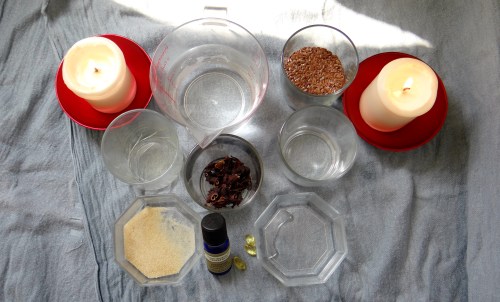
Ingredients/tools used:
Protein Hibiscus Flax Seed Gel (FSG)
12 oz Water (bottled water)
2 oz Rose water (Optional – not really required, can be replaced with plain water but a good addition)
2.5 oz Flax Seeds (this makes a thick gel – use less for a thinner gel)
Roughly 0.2 oz hibiscus petals (optional)
0.2 oz Gelatine (protein optional – those with protein sensitive hair will want to skip it)
5 drop Grapefruit Essential Oil (you can use any Essential Oil or none at all)*
3 Capsules vitamin E oil – roughly 0.15 oz
Non Stick Pot
Spoon/spatula
Sieve
Disinfected container (squeeze/pump bottle is best)
*If you are pregnant do not use any essential oil.
Alternatives:
Rose Water can be replaced with regular water if you do not have any however, rose water does have its own nourishing properties (read here). If you do not want to use Hibiscus it can be skipped all together otherwise you could also use dried rose petals. Glycerine is a humectant that does not always play nice with peoples hair therefore, it can be skipped all together otherwise you can replace it with honey or agave nectar which also are humectants. (Humectants provide the hair with moisture from the air (humidity) however, it always depends on the weather conditions in the area where you live). If you have too much humidity it can cause frizz and if you do not have enough humidity in the air the results can be the opposite; drawing moisture from the hair outwards to the air which causes driness. Aloe Vera Juice can also be added to the mix if you have any on hand for its moisturizing properties. If you prefer your gel to be thinner either add more water e.g. 13 – 14 oz or reduce the amount of flax seeds use e.g. 1 – 1.5 oz.
Mixing Method:
1. I first warm up the water and rose water together in a pot, once it starts to lightly warm up I throw in the flax seeds and begin to stir. 2. After about 5 – 7 minutes of the liquids and flax seeds have started to boil I throw in the hibiscus petals and let that boil for a further 5 – 7 minutes while continuing to stir (you must stay by the pot the whole time and continue to stir). As the hibiscus boils you will notice the colour of the gel starts to change and as it boils the liquid starts to become thicker. 3. Depending on how thick you want your gel, remove it from the stove (the longer on the stove the thicker the gel) and immediately pour it through a sieve. (As soon as the seeds are out of the pot be sure to cover the pot with water to help with the clean up). 4. I squeeze out any excess gel from the seeds with a spoon/spatula and then transfer the seeds into a container. Let the seeds cool down before covering with an airtight lid and storing it in the freezer to be reused next time. 5. Let the gel cool down a little (it should still be warm) before adding the gelatine (skip if not making a protein gel). 6. I sprinkle half the gelatine evenly over the top of the gel and begin to stir then add the remaining and repeat. 7. I use an electric whisk to help breakup any lumps and clumps and also to help loosen the gel a little (otherwise it can become really thick and “jello- like” once it cools). 8. Let the gel completely cool down before adding the oils otherwise the heat will destroy their properties. I add the Coffee Infused Oil, Essential Oil, Vitamin E Oil and the Glycerine (optional) and stir before pouring it into a clean & disinfected pump container.
Storage:
FSG has a short shelf life so it is essential to store it in the fridge whenever it is not being used! It generally will be go for 2 weeks 3 weeks maximum however, you can save some of your gel if you know it won’t be used up before it goes bad by pouring some into ice-cube trays in the freezer. Put the gel ice-blocks in a sandwich bag and remove some cubes whenever you need some gel.
Benefits:
Protein Hibiscus Flax Seed Gel (FSG)
So while I have previously written about all the nourishing benefits of FSG (yes this gel actually has more than the ability of giving your hair some hold) I will quickly jot down some of the benefits of FSG in general along with the benefits of a protein FSG:
Its rich source of vitamin E holds the power to help with hair growth.
Provides the hair with shine.
It contains moisturizing elements (along with the additional moisturizing ingredients added) helps keep the hair moisturized.
Provides nourishment to the hair roots, shaft, and the scalp.
Gives the hair a light hold that is not crunchy or flakely
Helps smooth the hairs cuticle
Said to help prevent early hair discolouration thanks to the Vitamin E in the flax seeds.
Contains Omega-3 fatty acid that helps nourish the hair follicles.
Provides additional elasticity thanks to the Omega-3 fatty acid.
The addition of protein provides the hair with strength especially for those with fine/chemically damage/heat damaged hair.
The addition of protein also helps reestablish the elasticity of the hair (when you use a moisturizing leave-in and follow up with a protein gel).
This is the “how to” video:
I would love to hear what you think of this recipe. If you try the protein version (or skip it) I would really like to hear how it worked for you.
Every morning (practically every morning) I start my hair routine by doing a Scalp Massage.
Scalp Massages
Benefits of Scalp Massages:
In truth it has become one of my morning rituals. I love everything about scalp massages, the main reasons are:
When you massage your scalp you help stimulate hair growth because you are circulating blood flow to your scalp which helps your hair follicles.
Let’s face it massages feel awesome and are really relaxing. I smile throughout my massage and it just makes me start the day off on the right foot.
It helps to bring volume to your roots (my fine haired ladies will understand what I mean about this!)
It helps to bring your hair down after hours of being up and away for the night, especially if you do the pineapple method. I normally do a modified pineapple (cover my hair with a scarf minus the hair bubble if I haven’t re-twisted, Bantu knotted etc).
Since you are massaging your scalp with oil, it can help sooth a flaky scalp.
*You can substitute pure cold pressed Castor Oil with Jamaican Black Castor oil.
Note: some people have found both or either Castor Oil/Jamaican Black Castor Oil to give them skin allergies so please make sure to do a patch test if you have never used the oil before. Essential oils are quite potent especially ones like Peppermint so please make sure you dilute it in enough carrier oil otherwise you will burn your skin and cause irritations! If you are pregnant please DO NOT use any essential oils and always consult with your doctor/dermatologist if you are trying anything new.
Oil for Scalp Massage
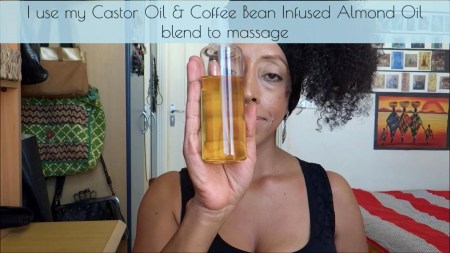
The magic of scalp massages is two fold, on the one hand it is the actual scalp massages and the other is the use of oils. You do not have to use the same exact oils I do but I do highly recommend some form of Castor Oil (if you are not allergic). Here are the benefits of the oils I use:
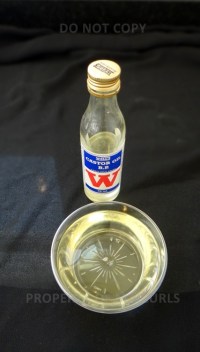
Castor Oil:
I use 70% Castor Oil
Increase hair growth
Promotes healthy hair due to omega-6 essential fatty acids
Thickens thinning hair
Reduces hair damage
Eliminates dry scalps and hair
Helps reduce scalp irritations due to anti-bacterial and fungal properties
Helps retain moisture in the hair and scalp
Excellent sealing oil
Promotes shiny hair
Boost your hair’s overall health
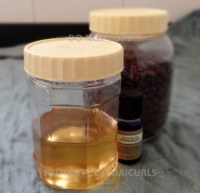
DIY Coffee Bean Infused Almond Oil:
Coffee Bean Infused Almond Oil
Reduces hair shedding and said to reduce excessive hair loss because of the antioxidants present in caffeine.
Increases hair growth since caffeine promotes blood circulation in the scalp which promotes growth.
Known to darken the hair and slowdown the early onset of grey hairs (with frequent and consistent use)*
Adds sine and dimension to the hair due to the darkening effect of the oil
*Should you have bleached/blond or dyed hair you do not want to darken, I suggest not trying this oil.
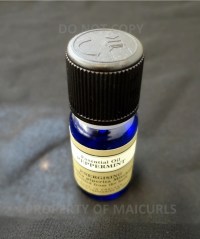
Peppermint Essential Oil:
Peppermint Essential Oil
Soothing effect to the scalp
Helps combat dandruff and lice
Promotes healthy hair growth
Helps relive scalp irritations due to antiseptic properties
Method:
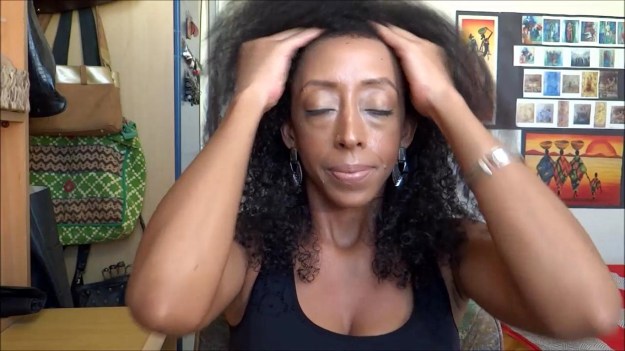
All I do is put a few pumps of the oil blend on my fingertips and massage my scalp in a circular motion. I am very gentle and focus on one spot then move onto a different part of my scalp till I am done. I then move onto refreshing, moisturizing, styling my hair etc.
So in closing if you haven’t intregrated scalp massages into your routine….what are you waiting for???
I would love to hear if you do scalp massages, how often, what oils do you use?















 Maicurls