Category Archives: Ayurvedic Herbs for Hair

Shikakai – Ayurvedic all Natural Shampoo (Option 1)

Hi Maicurlies,

I hope all is well! 

Today I am coming to you with another Auyvedic product (yes I know) and as the title states, it can be used as a substitute for commercial Shampoo! Shikakai powder (which means “fruit for hair”) is predominantly found in Asia – most noticeably India and is derived from fruit pods of the Acacia Concinna tree. 

In Asia it is a popular alternative to shampoos which can contain harsh chemicals. Many of us natural curlies tend to stay away from shampoos that are not sulfate free due to the fact that shampoo can really dry out our hair. In some cases even sulfate free shampoos can sometimes dry out our hair (not all and not for everyone.)
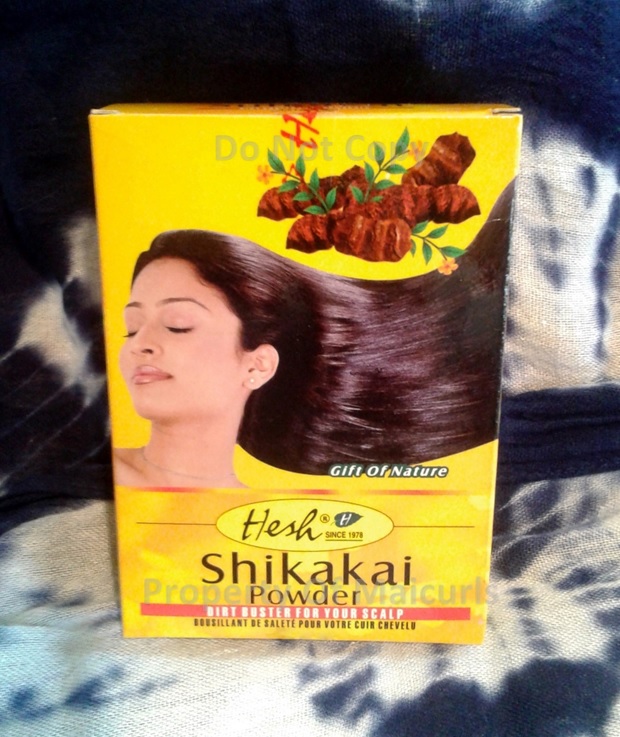
Shikakai - Hesh

Shikakai – Hesh

The brand of Shikakai I used is Hesh and the box states it:

  • Acts as a natural astringent for hair 
  • Clears dandruff
  • Cleans dirt accumulated on the scalp
  • Conditions the hair
  • Strengthens hair roots
  • Promotes luxuriant growth
  • Acts as a coolant for the scalp

To use Shikakai you do not need any additional ingredients apart from water however, I know some people might add a little oil to the mix. Note: Shikakai only lathers up moderately. 

Box application instructions:

1. Take required quantity of powder, add a little water and mix to make a thick past. 2. Gently massage (scalp) using your fingertips. 3. Wait for 2 – 5 minute and 4. wash thoroughly with water.

Shikakai Powder

Shikakai Powder

My experiments: I tried two different methods

1. Box method – 6 tablespoons of Shikakai and 8 tablespoons of water. It made a really thick paste and I applied it to my damp scalp as instructed. I carefully and slowly massaged my scalp for a few minutes while in the shower, left it on for 5 minutes and then rinsed it off with lukewarm water. While I was rinsing it off I would glide my hands down the length of my hair so that there would be some contact but it was not concentrated.

Pros- My scalp felt and looked really clean! I had no buildup at all and although I only really concentrated on my scalp the length of my hair also felt clean. I did not get that “squeaky clean” feeling which normally happened when I used shampoo but it definitely removed buildup and oil.  

Con – My hair felt a little more dry afterwards and less “conditioned” and it took a couple of rinses till I felt like I got all the mix off my scalp and hair. I knew I needed a DC after rinsing it out because even while my hair was damp it felt a little dry. Using a “paste” was a little too thick/heavy to be massaged into my scalp.

2. Second Method – I prepped my hair by doing a hot oil treatment for 30 minutes before applying the Shikakai. I used less powder and a lot more water (3 tablespoons Shikakai and 3/4 cup of water). I put the mixture in an old (clean) squeeze container and liberally squirted the mixture over my scalp. (Do not get it in your eyes it will burn and feel uncomfortable!) Since it was a lot more liquid-based, the mixture ran down my hair as well. I gently massaged just my scalp and let it sit for 5 minutes before rinsing it out with lukewarm water.

Pros – Again my scalp felt and looked really clean as did the length of my hair.  No buildup, no squeaky clean feeling and my hair did not feel overly dry. I think because I used more water, less powder and did a hot oil treatment beforehand I was happier with how my hair felt. Nevertheless I did follow up with a DC just for precaution.

Cons – It was a little difficult keep the mix on my scalp since it was very watery (it helps to apply this while in the shower.)  Apart from that I cannot complain. 

*UPDATE: I forgot to mention the scent of Shikakai. It does not have the most pleasant scent. I guess I would describe it as having a strong herbish smell. I really can not point my finger on anything to compare it to but it does have an “earthish-herbish” smell with a hint of spice  (sorry that probably doesn’t help.) After the rinses the scent dissipated a little and with the DC that followed I did not notice it anymore. 

Verdict

Would I buy this again? Yes, but I would use my second method because my hair felt better with that method.

Aritha powder is going to be my next experiment as a natural alternative to commercial shampoo and I will let you know how that goes in (part 2)

P.S. I was not asked/paid or compensated to mention the company or brand. The product was bought with my own money and the review was based on my own personal experience.

Have you tried Shikakai as a shampoo? If so, what did you think? If not, do you use any other Auyvedic powder as a natural shampoo? Let me know! 

Maicurls
Maicurls

Coconut Cream For Hair

Hello Maicurlies,

So I have been experimenting with a number of different things because while I trained myself to stop buying every product I see in a store I am a Do It Yourself (DIY) & natural ingredient junkie and I have a feeling that won’t go away anytime soon!

So what was my latest experiment? Coconut Cream!

I have been using Coconut Milk in all of my DIY Deep Conditioners (DC’s) for nearly a year and I have enjoyed the benefits of Coconut Milk.

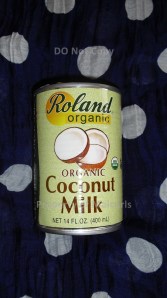
Organic Coconut Milk

       Organic Coconut Milk

Coconut Milk

                            Organic Coconut Milk

 Some of the attributes of Coconut Milk:

  • rich in protein and nutrients to strengthen the hair
  • boosts hair growth
  • combats dandruff
  • reduces hair fall
  • reduces the appearance of grey hair
  • softens the hair
  • reduces frizz

* The more frequently you use it the better your results and more long term they will be.

Now for my new love Coconut Cream.

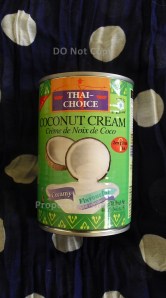
Coconut Cream

             Coconut Cream

Coconut Cream has pretty much the same attributes to Coconut Milk but also has a few additional benefits from my experience:

  • Coconut Cream has a higher fat content and helps prevent excessive hair shed
  • My hair had less tangles during the week I used it
  • Detangling was easier on wash day due to there being less tangles
  • Its consistency is much thicker than the Coconut Milk, this makes it less “drippy” when applied as a DC. 

In order to try and get an idea of which of the two I preferred I experimented using my normal Moisturizing DC and one new mixture using Coconut Milk one week and then Coconut Cream the following week.

First experiment (my normal Moisturizing DC)

  • 1/4 cup Coconut Milk/Coconut Cream
  • 4 tablespoons Pure Honey
  • 1/4 cup Fresh Aloe Vera Juice (AVJ) with Vitamin E added to it
  • 1 Overripe Banana*
  • 2  tablespoons Conditioner
  • 1 teaspoon Grapeseed Oil

* I like using overripe bananas because they are softer and less likely to results in lumpy and difficult to rinse DC. You can substitute bananas with banana baby food. 

My second experiment

  • 1 cup conditioner
  • 1/3 cup Coconut Milk/Coconut Cream
  • 1/4 cup Amla
  • 2 tablespoons honey
  • 1 tablespoon Rosewater
  • 1 teaspoon Grapeseed Oil
  • 1/2 teaspoon Glycerin 

As I mentioned while my hair responds well to both Coconut Milk and Cream I must say my hair felt soooo good with the Coconut Cream mixes. It was just a bit more bouncy, more defined, and had more shine. So for me, Coconut Cream is a keeper! 

Have you used Coconut Cream? What did you use it for? How was your experience? 

Thanks

Maicurls

Maicurls

Hibiscus Flowers For Hair, Health and Skin

Hi Maicurlies,

So today I wanted to delve into the world of flowers and their abilities to help our health and appearance! The flower of the day is Hibiscus (Rosa-Sinensis!)

Hibiscus

The particular Hibiscus I will be writing about is the Red Hibiscus since that is what I grow in my garden.

In this post I will just touch upon the benefits and uses of Hibiscus powder/petals. I plan to write about how to make the powder in the coming weeks.

If you have been reading my Blog or following my Videos on YouTube you will notice that I love being able to use one product for several different purposes and Hibiscus does just that! While the Hibiscus plant (found in tropical regions across the world as well as countries in Asia and the Middle East) and in particularly its flowers are commonly used for decorative purposes , today I will be discussing its benefits as an Ayurvedic herb!

Hibiscus For the hair Hibiscus powder can be used to help grow healthy hair due to the fact that it stops excessive hair shedding, provides the hair with a boost of luster and bounce, adds a natural shine to the hair, strengthens the hair and as if that is not enough it is also said to delay premature graying. When combined with other Ayurvedic herbs such as Alma and Brahmi – the mix results in a wonderful conditioning paste. You can make your very own Hibiscus oil by seeping some petals in a carrier oil (e.g. Virgin Coconut Oil, Extra Virgin Olive Oil, Grapeseed Oil, Almond Oil etc.) for 2 weeks and then straining it out. Should you be looking for a more intensified red tint from Henna, then Hibiscus powder is what you need as it can give you a more burgundy to red wine result. (Note – If you have light hair e.g. blond to light brown the colour deposit from the powder will be more visible than for those with darker hair e.g. dark brown to black.)

Keep in Mind – Hibiscus is slightly acidic and therefore might make your hair feel a little dry afterwards (depends on person to person) therefor, you should follow up with a moisturizing deep conditioner after application. You should also remember to cover counter tops with old newspapers and wear gloves and clothes you do not mind getting stained when using Hibiscus powder.

For the skin – Apart from its ability to help in the health of our hair, Hibiscus is also an awesome skin care ingredient that you should try to add to your routine! It is known to help reduce acne, eczema and skin irritations, particularly when it is made into a paste with Amla. Since Hibiscus contains Alpha Hydroxyl Acid (AHA), this makes it a commonly used ingredient in anti-aging products due to the fact that it stimulates the production of collagen. It is popular for its ability to reduce the appearance of winkles, delay the signs of again and reduce dark circles under the eyes.

For the Health – Hibiscus can also be consumed as a tea “sour tea” by seeping 2 teaspoons of Hibiscus powder in 1 cup of boiled water. (You can actually buy Hibiscus tea if you do not want to make your own.) The taste of the tea is quite sour and strong therefore you might want to sweeten it using honey. Hibiscus tea is said to help lower blood pressure, cholesterol levels, help those suffering with type 2 Diabetes and due the antioxidants present in the flower, it is said to help keep mild colds and flues at bay. It is also believed that drinking Hibiscus tea regularly can help increase your satiety (the feeling you get when you are full.) If you feel full you do overeat! 😀 At the same time it is believed that Hibiscus tea can help digest starch and sugar so why not add it to list of herbal teas right?! (Note: this is not a “diet” tea and should not be used as such.) 

P.S. you do not have to make your own Hibiscus power. There are number of sites selling Ayurvedic herbs (including Hibiscus) that are ready for use. 

Thanks

Maicurls

Maicurls